Thursday, September 18, 2014

Ammolite

What is ammolite?
Ammolite is a very beautiful gem that is fairly new. It was discovered in 1981 by the ICGC as a new organic gem and is currently considered the rarest gemstone in the world.

The ammolite is a very interesting gemstone, and one that I was very excited to write up. The ammolite gem is actually the fossilized remains of an ancient sea creature called the ammonite. It was a form of squid/crustacean that swam the seas in the prehistoric times.

The name "ammonite" is derived from the name of the Egyptian god Ammon, who believed that the creatures were divine and beautiful. Ammon is represented in ancient literature by the head of a ram with twisted spiral horns that are reminiscent of an ammonites spiraled shells.

Ammolite is a multicolored gem that has very vibrant colors. This is caused  by the aragonite in the stone. It glistens over in thin scales and as it layers more and the light hits it, it gets diffracted and gets the beautiful, glossy rainbow colors.

Where is it found?
Fossilized ammonite pieces are typically found all over the world, but AMMOLITE itself can only be mined in Alberta, Canada. Even though there are many fossilized remains, only about 5% of these produce ammolite, hence making it the rarest gem in the world. In a few centuries, ammolite may go "extinct", because when remains are gone, there will be no more remains.

The mystic ammolite
The legend of Ammolite goes back to the Blackfoot tribe of North America. Ammolite was discovered by the native Indians and used by them for years to ward off evil spirits.

It is believed by some Feng Shui masters that ammolite absorbed cosmic energy from the universe and, through the stone, it gives the owner health, wealth, and enlightenment. Considered a high energy stone it is said to enhance the harmony, vitality, and overall well-being of visitors and occupants of a home. Ammonite with layers of ammolite is thought to enhance the flow of Qi (life energy), to radiate strength, and to alter negative energy to positive energy. It is said that even for those that do not believe in Feng Shui, the presence of ammolite is considered beneficial.

Students of Feng Shui believe that ammolite absorbed the knowledge of the universe and that benefits are gained by anyone near it. The colors of ammolite represent the harmonious balance of fire, earth, metal, water, and wood.

Sunday, August 24, 2014

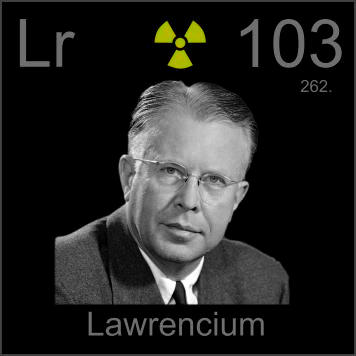
Lawrencium

Lawrencium is not a naturally occurring element. it was synthesized in 1961 by Albert Ghiorso, Torbjorn Sikkeland, Almon Larsh and Robert Latimer. It was the very last of the actinide series to be discovered. Californium was bombarded and hence, lawrencium was created. It was named after Ernest Lawrence, who invented the cyclotron particle accelerator.

Lawrencium is highly radioactive and has to be handled and stored very carefully. Currently, it has only been produced in small amounts but it is still very dangerous. It is only useful for scientific purposes.


Wednesday, August 20, 2014

Garnet

rough garnets
Rough, Uncut Garnet
Garnets are a very beautiful gems best known as the gemstone for those born in the month of January. Garnets come in every color except blue. Rhodolites are the purple ones, Hessonite are the orange, red, and pinkish ones, and Tsavorite and Uvarovite are the names for the green ones. Their rank on the Mohs scale of hardness is a 7.
Garnets can be found in the following places:
Arizona, USA
South Africa
Argentina
Australia
Brazil
Burma, Myanmar
Scotland
Switzerland
Tanzania

Demantoid Garnet Russia 1.93 cts
A cut demantoid garnet
Garnets are formed when high pressure and temperature is a factor and because of this, geologists use it as a gauge to tell them what the temperature and pressure amount was when it was being created. Garnets are priced according to size and color. The most expensive garnet color is a pale green called a demantoid that can only be found in Russia. Because it is so rare, it starts at prices of $1000 per carat, if not more.

EXTRA FACTS (MYTHS ABOUT THE GARNET)
Garnet's powers are thought to be healing, strength, protection, and is often worn to heal inflamed skin. It is also believed to help in regulation of heart and blood flow, and is used to cure depression. In ancient times, a garnet was given as a gift to a very close friend as a symbol of everlasting friendship. (Garnets are also given on 2nd and 6th anniversaries.)

Tuesday, July 22, 2014

Ununpentium

Research scientists at the Joint Institute for Nuclear Research in Dubna, Russia and the Lawrence Livermore National Laboratory, California believed they had made element 115 in Russia in 2003. The work was supposedly a collaboration between science teams led by Yuri Oganessian and Ken Moody. What many people DON'T know is that in 1989, a former scientist from Los Alamos National Lab named Bob Lazar stepped into the spotlight with an astonishing claim that he had worked on spaceships in Nevada.

As if this claim wasn't shocking enough, he went farther to say that they could produce their own gravity using a super-heavy substance- aka element 115. Now this, you're probably thinking, is all well and good. This guy knew that ununpentium was around and used it in his stupid, pointless argument. Here's where it gets interesting: element 115? It didn't exist in 1989! It wasn't "actually discovered" for another 14 years after Lazar's claim- yet his description matched it perfectly.

The government denied Lazar's working for them, and covered up the "finding" as their cooperation with Russia. I find that MIGHTY interesting- especially being they called it the exact same thing that Lazar called it! Coincidence? I think not. Other than it being superheavy, not much is known about ununpentium. This is mainly because when the minuscule amount that was produced WAS produced, it fell apart within minutes. It is very unstable.

What do you think of Bob Lazar? You can Google him and learn more about what he said and then leave me a comment with your opinion!

Maddie

Wednesday, June 25, 2014

Mendelevium

Mendelevium was first identified by Albert Ghiorso, Bernard Harvey, Gregory Choppin, Stanley Thompson, and Glenn Seaborg in 1955 at the Lawrence Berkeley National Laboratory, California. Only 17 atoms were produced in an all night experiment- it was highly dissapointing, as it was supposed to produce 3-4 atoms per hour. It was named after the Russian chemist Dmitri Mendeleev- the guy who devised the first periodic table.

Like many elements in the actinide series, mendelevium is highly radioactive and must be stored carefully. It is not found free in nature, and it has not been produced as metal yet. It is currently only of scientific use. It is produced through charged articles of lighter elements.

Monday, June 23, 2014

Einsteinium

Einsteinium was first discovered in 1952 by scientists at the Lawrence Berkeley National Laboratory. The project was led by Albert Ghiorso. It was found with fermium in debris from a hydrogen bomb test, on filter papers from a plane that had flown over the explosion area. After finding the small amount, all the coral in the surrounding area (hundreds of pounds of it) was examined to see if there was more. As of today, it can only be produced in very tiny amounts- 2 grams being the highest amount.

It was named after- you guessed it, Albert Einstein! It is very harmful due to it's high radioactivity. It is never found naturally, as it is a synthetic metal. The first time it was actually brought down to it's natural form was more than a decade after it's initial discovery. It currently has no other use to it than research purposes.


Friday, June 6, 2014

Sugilite

sugilite cabochons
What is sugilite?
Sugilite was found in 1944. However, the largest amount was found in 1975 in the Kalahari Desert in Northern South Africa. Also, in 1979 a large deposit of the gem was found only 3200 feet below the first discovery. If only they had kept digging a little more....'

Sugilite is a very beautiful purple gem that can range from a pale lavender/grey to a deep, rich purple. It is also a very waxy gem- which is surprising as it is relatively hard, and 6.5/7 on the Mohs scale.


Where is it found?
Sugilite was actually discovered first in Japan. It is named after the Japanese geologist who first discovered the specimen, Ken-ichi Sugi. Other than Japan, it can be found in:

  • South Africa
  • Canada
  • India


The mystic sugilite
Sugilite is said to strengthen the heart, aid in physical healing, and reduce stress. It is also said to be a balancer of the mind, body and spirit and encourages peace of mind. Legend also says it is used to protect against anger and other negative energies....


Friday, May 23, 2014

Onyx

What is onyx?
onyx stones
An onyx is a very dull gemstone that is found in Brazil, India, and California. It has a very smooth texture and is usually brown, though there are some brown and red onyx too. Some onyx have white stripes through them. These specific types are called sardonyx.

The word onyx comes from the Greek term for nails or claws. The myth is that when Venus slept with Eros, he clipped her fingernails and they fell to Earth. Since no part of a God can die, they were instead turned into stone which became onyx.

Onyx is a 6.5 on the Mohs scale of Hardness, and is often used in grinding and carving. It is made up out of microcrystalline quartz, which gives it a very strong structure. Onyx was worn as a protective stone in battle, and also used to carve small Hercules statuettes for courage.

Onyx is also believed to be an increase of happiness, instinct, and intuition. It is also worn to help fight disease and break bad habits.


Wednesday, May 14, 2014

Berkelium

Berkelium was first discovered by Stanley Thompson, Albert Ghiorso and Glenn Seaborg in 1949. It was named after Berkeley, California where it was discovered. It was created by bombarding americium and was separated and identified by high temp ion-exchange columns. It is only produced in small amounts at labs by nuclear reactions.

The metal itself is silvery-white and is very radioactive- but it deteriorates slowly in air. This is thought to happen because of a thin protective oxide layer that is automatically formed. It is currently only used in scientific experiments and research.


Thursday, May 8, 2014

Curium

Curium was discovered by Glenn T. Seaborg, Ralph A.James, and Albert Ghiorso in 1944- right after the discovery of Americium. Curium was first named "delirium" because of the troubles that workers had separating it from americium. It was named after Marie and Pierre Curie, who devoted a lot of time working on radioactivity and discovered radium and polonium.

Curium is a dangerous element to handle- if not stored/handled right, it accumulates in bones and destroys the marrow- therefore preventing the formation of red blood cells. It is highly radioactive- so much so that it glows red in the dark. Otherwise, it is a dull silvery-white metal that tarnishes slowly at room temp. It is mainly used in scientific research.


Americium

Americium was founded in? AMERICA! This element was named after it's founding country, and also because it is just below Europium on the Periodic Table- and Europium was named after Europe. It was first discovered in 1944 by Seaborg, James and Morgan at the metallurgical laboratory at the University of Chicago. It is not a natural element, and was discovered as a by-product of plutonium processing.

However, Americium is highly radioactive, and must be stored and handled very carefully because of this. It appears a silvery-white metal, and has a similar density to lead. It is used most commonly in smoke detectors- one gram supplies enough energy for more than 3 million detectors. It tarnishes slowly at room temperature.


Thursday, May 1, 2014

Neptunium

Neptunium was the first synthetic transuranium element of the actinide series to be discovered. It was first created by Edwin McMillan and Philip H. Abelson in 1940, at the Berkeley Radiation Lab of the University of California. It was created by bombarding isotopes of uranium with other elements. It was named after the planet Neptune, much like uranium was named after Uranus.

Neptunium is a silvery metal, and has to be handled and stored carefully due to it's radioactivity. It has five known oxidation states- and each state produces a different color. Neptunium is often bombarded with neutrons to create plutonium- which is then used in spacecraft generators and terrestrial navigation beacons. Neptunium is also used in neutron detection equipment.


Wednesday, April 30, 2014

Polonium

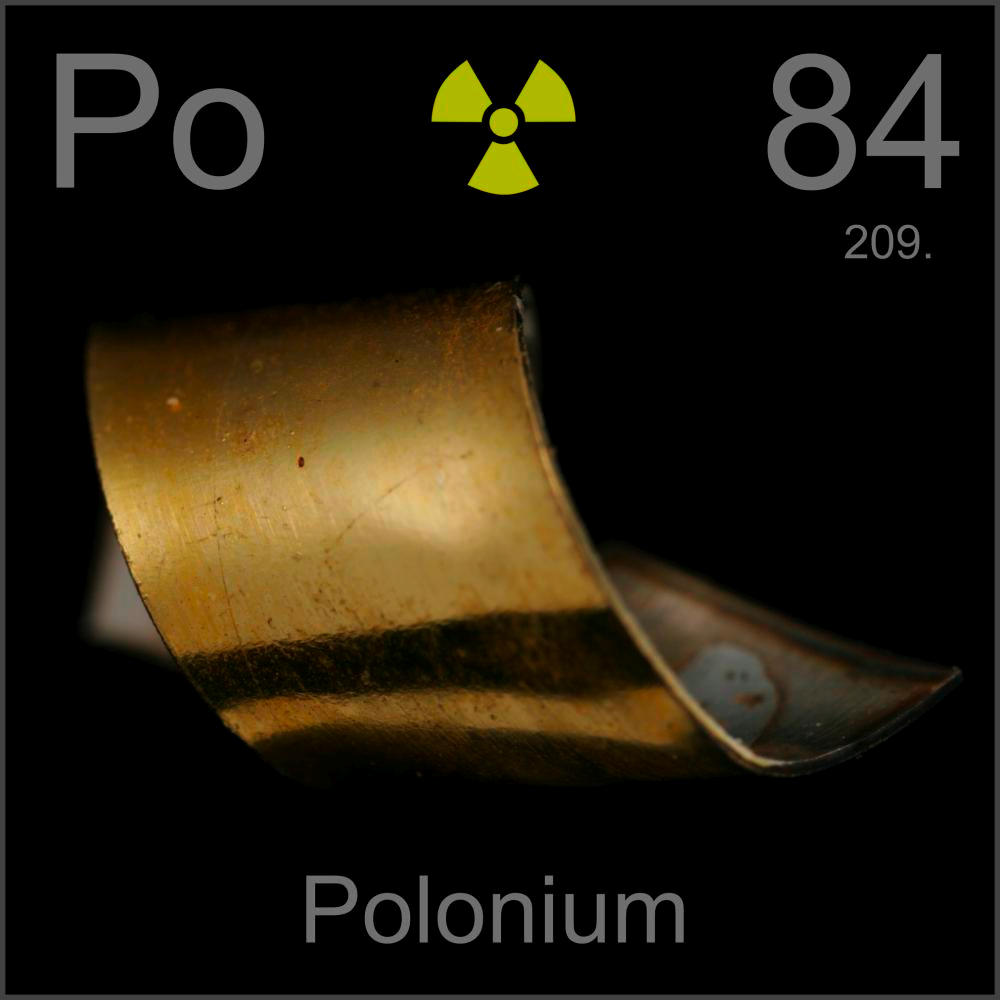
Polonium was discovered by Marie and Pierre Curie along with radium in 1898. They found it while investigating radioactivity in Paris. When they discovered it, they wrote: “We thus believe that the substance that we have extracted from pitchblende contains a metal never known before, akin to bismuth in its analytic properties. If the existence of this new metal is confirmed, we suggest that it should be called polonium after the name of the country of origin of one of us.”

Polonium was named for Marie's birth country- Poland. At the time of polonium's discovery, the danger of working with radioactive things wasn't known. Because of this, their notes from their discoveries were so radioactive that they are currently stored in a lead box. Polonium is very dangerous and toxic. It is highly dangerous if swallowed or inhaled- and exposure to it increases chance of getting many different cancers.

Polonium, while dangerous, is actually quite rare. It is a silver/gray metal. It is often used in products to get rid of static electricity in certain processes and is in rolling paper, wire and sheet metal. However beta decay sources are more often used for this because they are less toxic.


Wednesday, April 9, 2014

Thorium

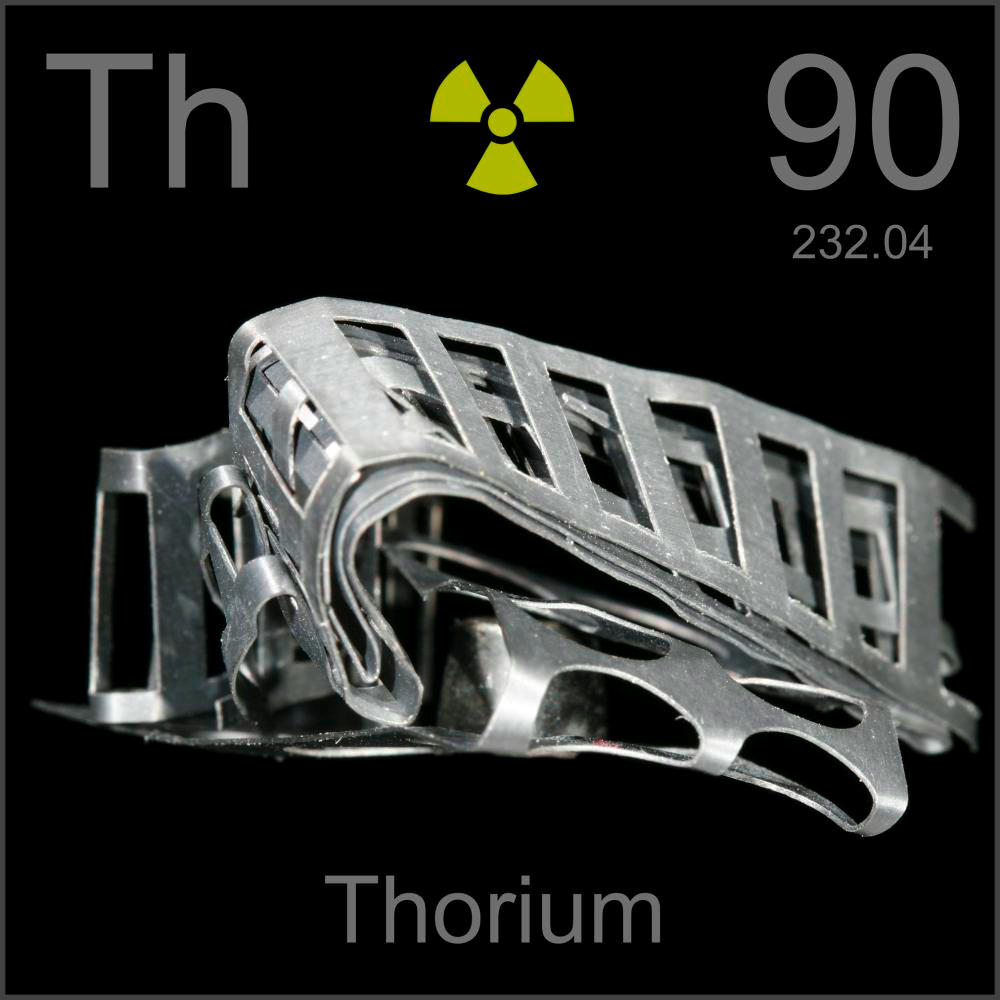
Thorium is an element found in human and animal bones- but however, it is very radioactive and chemically reactive. It is relatively soft, and is silvery-white in color. It has a black oxide, but tarnishes for up to MONTHS before reaching that stage.

 In the future, there are plans for fueling nuclear reactors with thorium. Not only is thorium more abundant on Earth than uranium, but 1 ton of mined thorium can produce as much energy as 200 tons of mined uranium.

It is used in heat resistant ceramics and also in the aerospace industry along with magnesium and other alloys.

Tuesday, April 8, 2014

Protactinium

Hey, sorry about not blogging for awhile! I was sick last week and did not get around to my minerals, but now that I am better, here is a mineral!

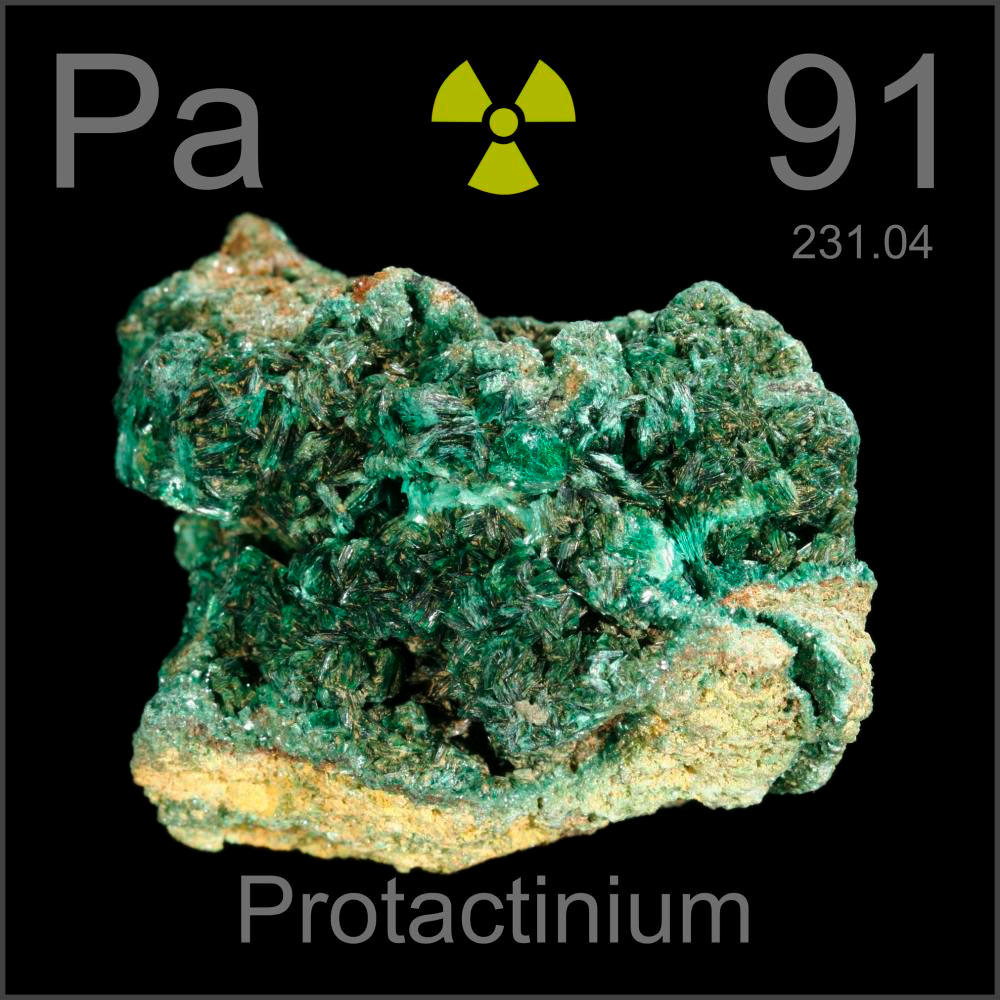
Protactinium is a shiny and silvery radioactive metal. It tarnishes very slowly in the air. It is one of the rarest and most expensive naturally occurring elements, costing $280 per gram. The most that has been found so far was 125 grams in Great Britain in 1961- it was found in radioactive nuclear waste. Even so, protactinium is radioactive on its own and because of that must be handled with extreme delicacy and care.

It is found in many uranium ores, and can also be obtained by extracting it from uranium. So far it has only been used in research projects.

Monday, March 31, 2014

Actinium

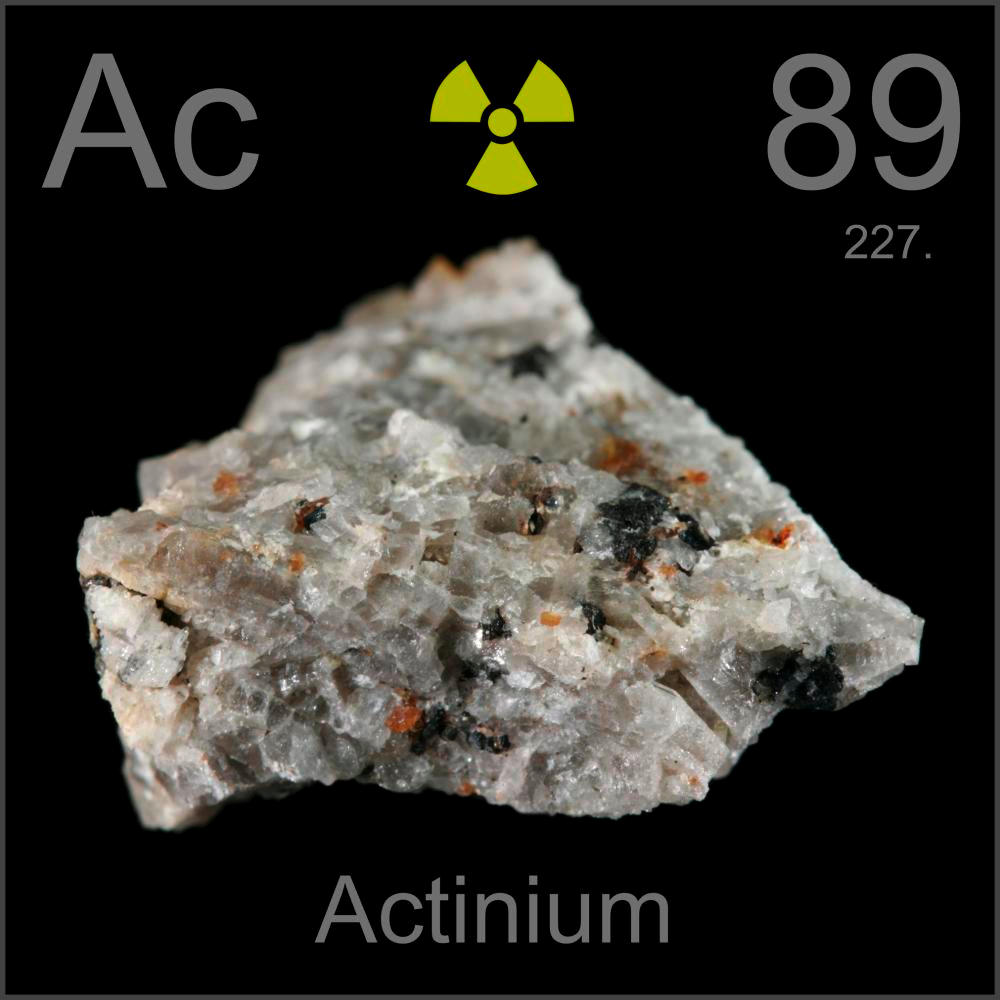
Actinium is the first of the actinide series of elements. They are a separate set because the behavior of actinium was so similar to the rare earth elements, particularly lanthanum.

Actinium is very active, actually 150 times more so than radium. None of it's properties are stable. It was discovered by Andre Debierne in 1899 and is named from the Greek word for beam/ray.

Actinium is found in decaying uranium and can be prepared by reducing flouride within lithium vapor. Because of it's high activity level, it is good at producing neutrons but more importantly, it has been used in studies to help cure cancer.

Monday, March 17, 2014

Francium

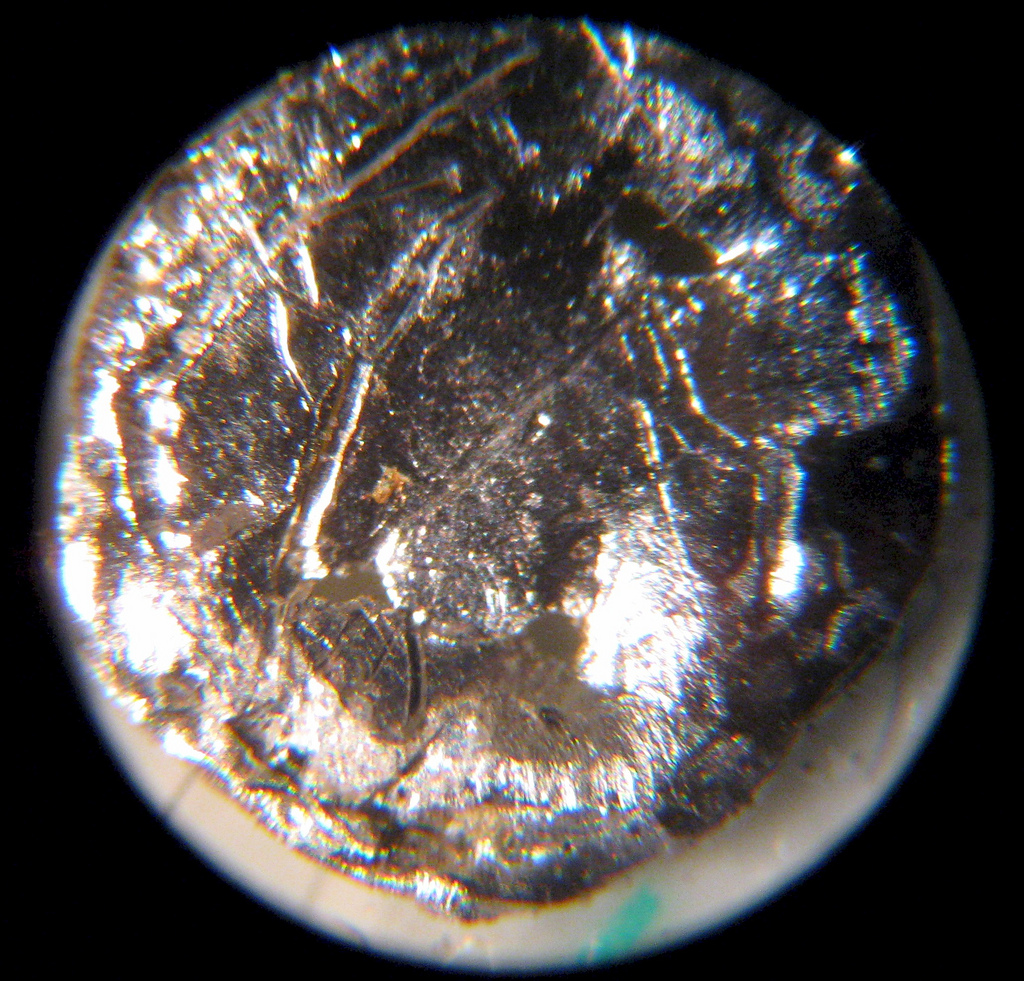
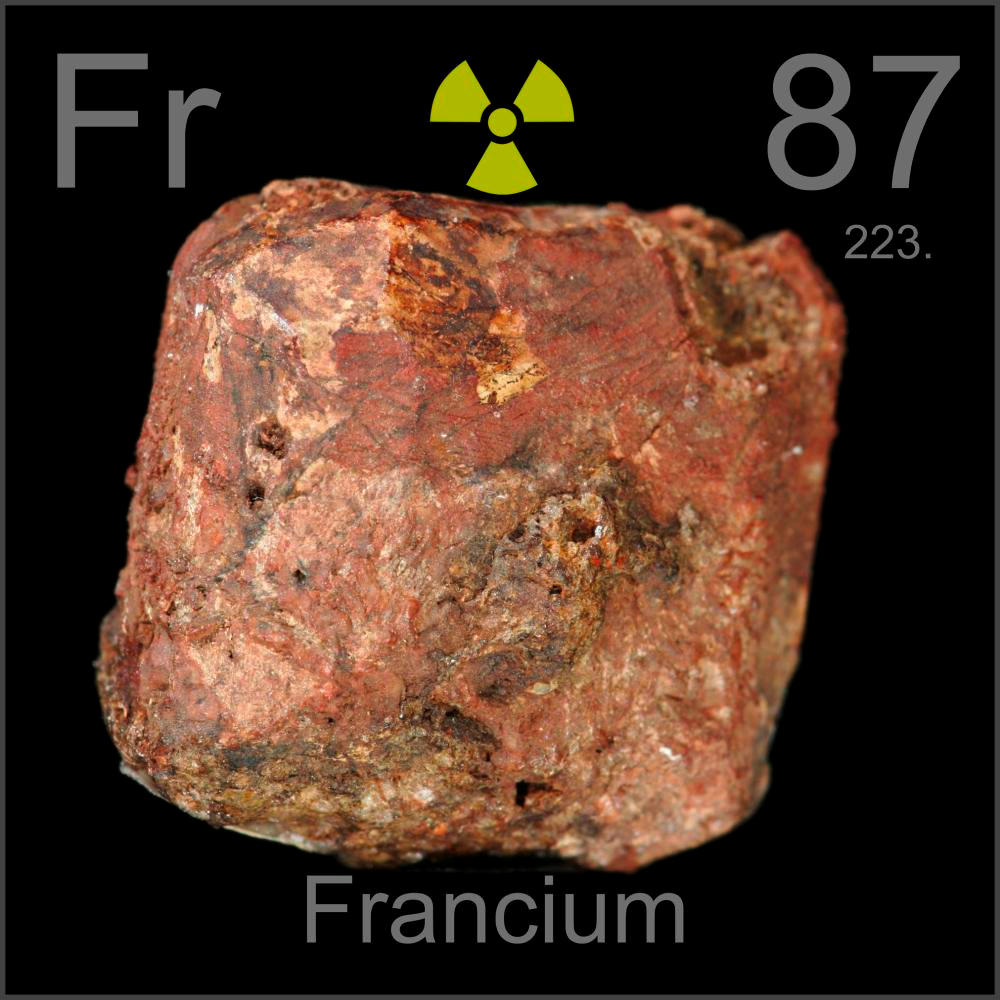
Discovered by Marguerite Perey of France in 1939, francium was named for France. The isotopes of francium are highly unstable, so all information known about it is from radiochemical techniques. It occurs naturally in uranium, but less than one ounce can be in the earth's crust at one time. Francium was actually predicted in 1870- scientists were convinced that there would be another alkali metal higher than caesium. They even predicted it would be element number 87!

There had been numerous false claims to the discovery of francium, but Marguerite was the one to discover it. The difference between her and other researchers is that she found the traces of it in decaying actinium; actinium is the PRIMARY natural source of francium, but it is harder to obtain than from uranium. Due to its rarity, francium has not been used in any commercial products or machines.


Saturday, March 15, 2014

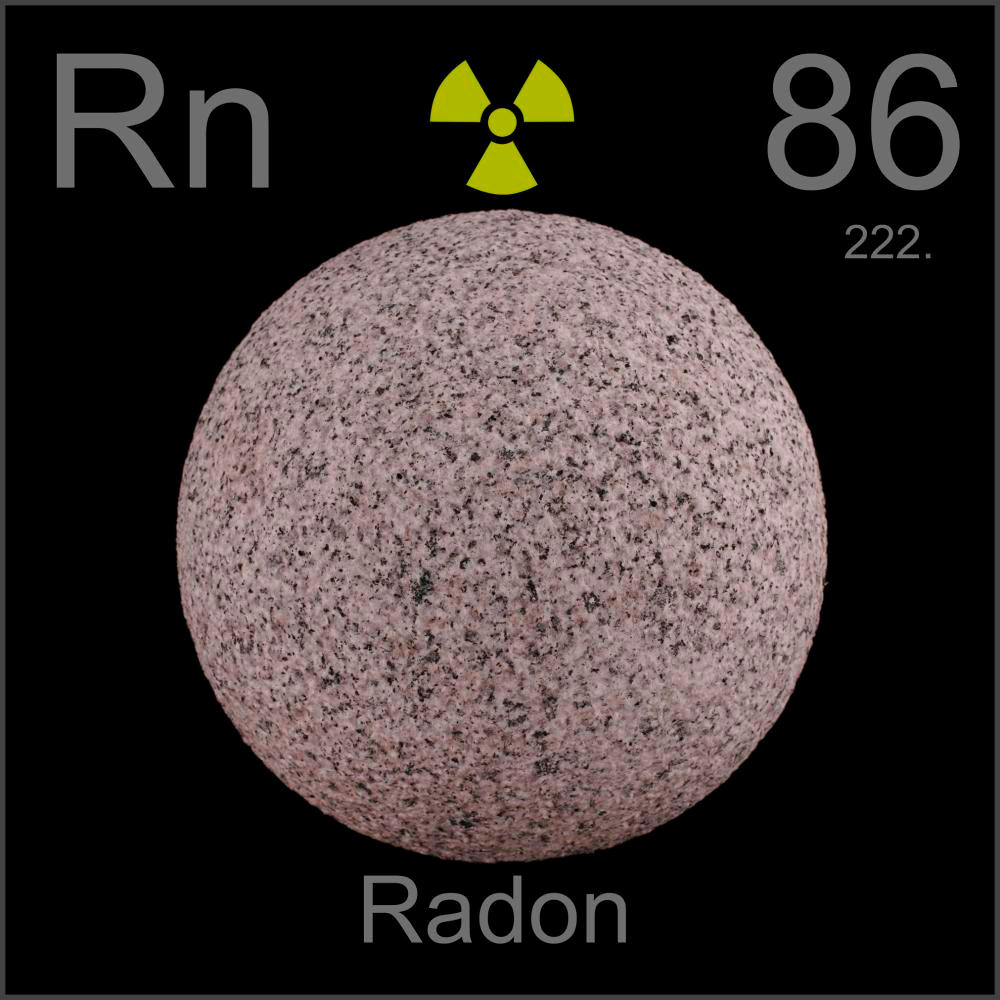
Radon

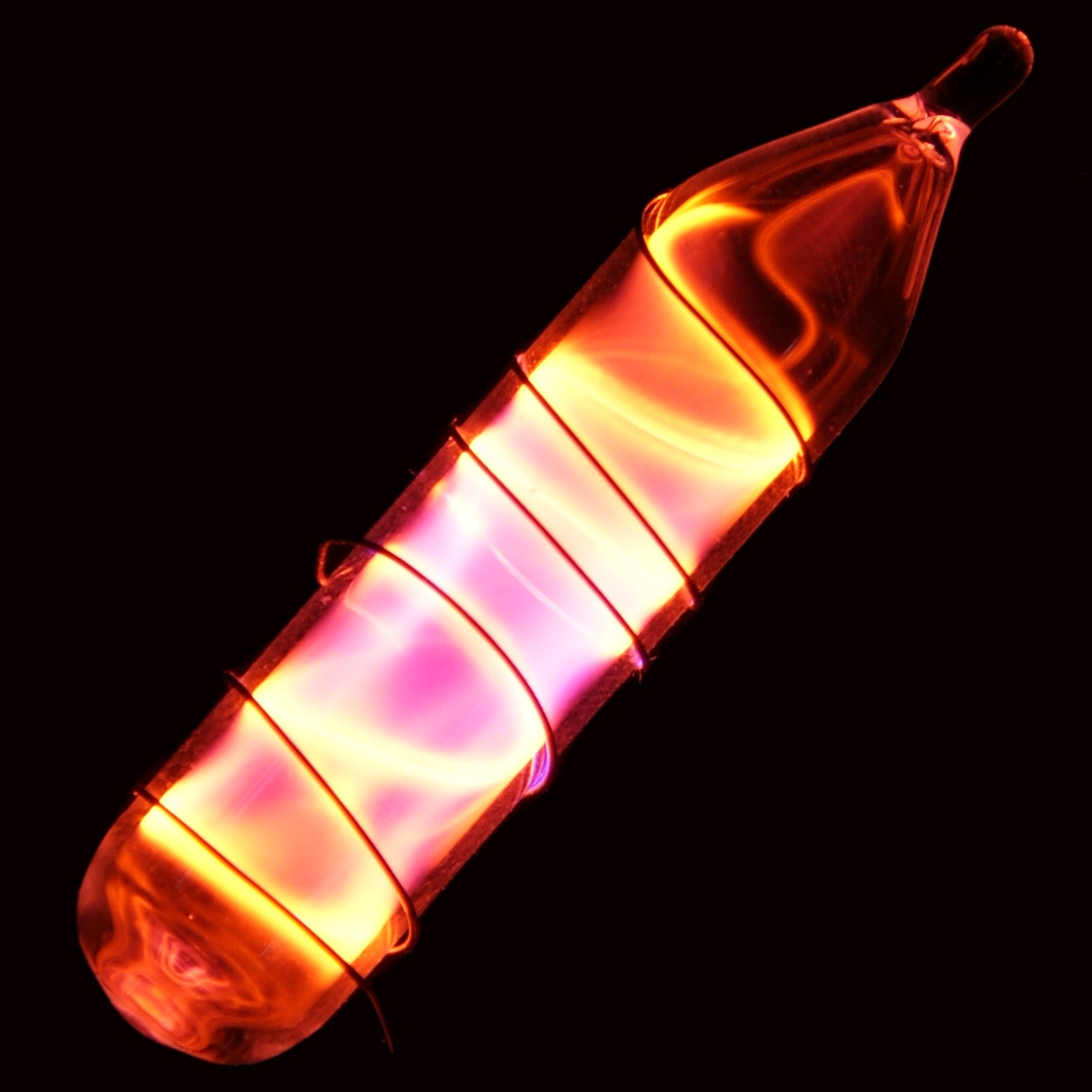
Discovered by Fredrich Ernst Dorn of Germany in 1898, radon was originally called radium emanation. It was isolated in 1908 and named niton. It's name originates from the word radium. It is a heavy radioactive gas, and it is colorless at regular temperatures. It is the heaviest of all gases. At very cold temperatures it appears yellow. Inhalation of radon is very bad, and in fact it has been tested and radon is the second leading cause of cancer.

Radon occurs naturally in some spring waters. Ernest Rutherford is sometimes mistakenly credited with the discovery of radon... however, he discovered the alpha particle radiation given OFF by radon.

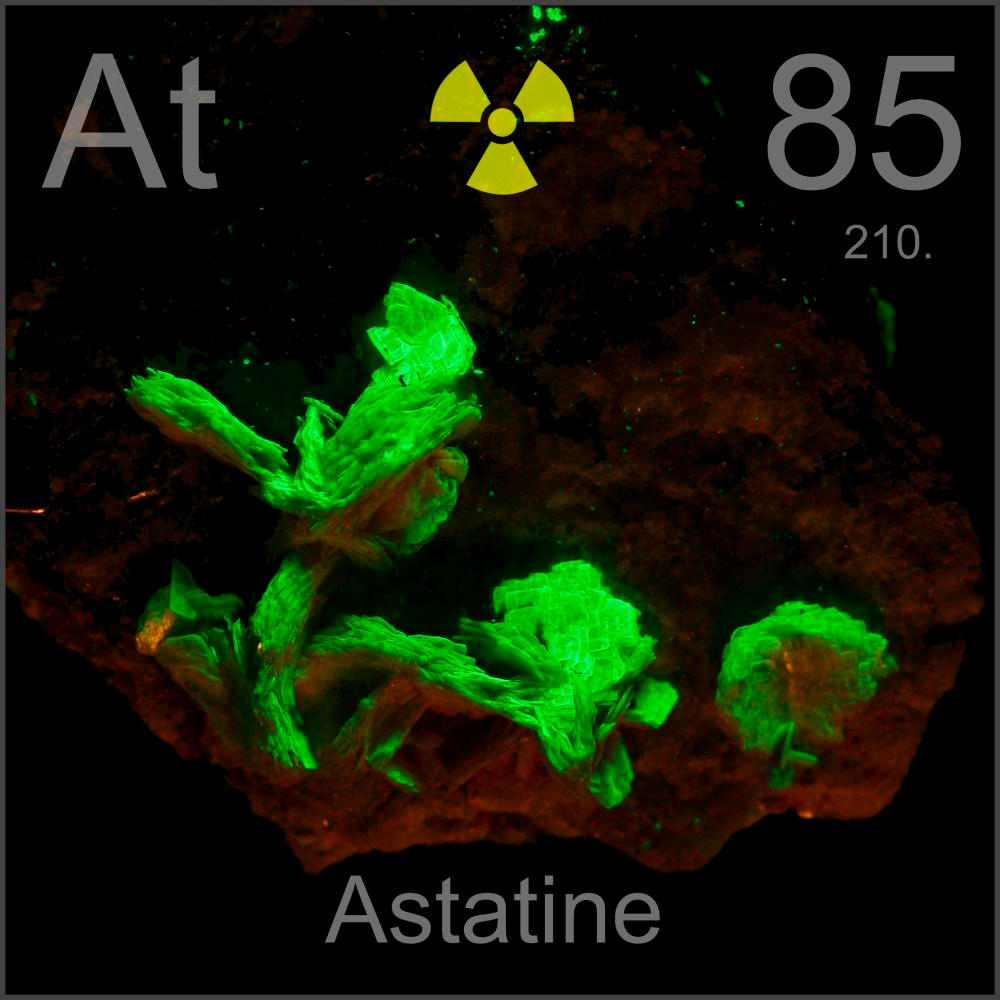
Astatine

Astatine is the 85th element. Discovered in 1940 by Dale Corson, Kenneth McKenzie and Emilio Segre, it was once believed to be the rarest element on Earth. Astatine isn't the RAREST, but it is among the rare elements of Earth, as it is usually found in part of a larger element that is in radioactive decay. Only up to one gram of astatine is found in nature at a time.

Astatine is invisible with the naked eye, since a sample large enough to see would disintegrate from its own radioactivity. Because of this, it is estimated that there can only be TWENTY-EIGHT GRAMS OF ASTATINE ON EARTH AT A TIME. Astatine is an important element in nuclear medicine, but as it decays so quickly it must be used within a few hours of its production. It has been used instead of iodine in some procedures, safer as it has a shorter half-life.

Monday, March 3, 2014

Bismuth

Not a lot is known about bismuth- but it is quite possibly one of the prettiest elements I have done so far. It is a very brittle, crystalline, silver metal with a multicolored tinge to it. It is the most naturally diamagnetic metal- this means that it is repelled by the magnetic field.

It also has a high electrical resistance... in fact, it's thermal conductivity is the lowest of any metal, excusing mercury. Like water, when it is frozen it expands.

Bismuth is often used in:

  • Medicine (bismuth subnitrate)
  • Cosmetics
  • Fire detectors and extinguishers
  • Bismuth/tin alloy (replacement for lead in bullets.)