Monday, November 25, 2013

Silver

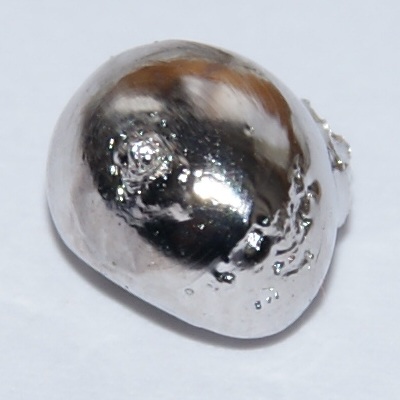
Silver- the metal that is very well known around the world. It is bought and sold, traded and hoarded- but who discovered it?

The truth is, Caveman Ooga-Booga discovered it! Just kidding... no one really knows who discovered silver, as it has been known to man since over 3000 BC. The word comes from Latin argentum which means silver. This is also how silver came to have the symbol "Ag".

Pure silver is a bright white with a metallic luster to it. It is a metal slightly harder than gold, but it is also very ductile and malleable- something that gold AND palladium are not. Pure silver DOES have the highest electrical and thermal conductivity of all metals and also has the lowest contact resistance of all metals. It is stable in pure air and water, but it tarnishes in air containing sulfur.

The alloys of silver have many commercial uses. Sterling silver (92.5% silver, with copper or other metals) is used for silverware and jewelry. Silver is also used in:


  • Photography
  • Dental compounds
  • Solder
  • Brazing
  • Electrical contacts
  • Batteries
  • Mirrors
While silver itself is not poisonous to humans, it's salts are due to the anions in it.

Fun Fact: Silver nitrate is often used to disinfect deep wound like fishers and gashes.


Palladium

Discovered by William Wollaston of England in 1803, palladium is named after the asteroid Pallas. Why? Because the asteroid was found in 1803 in the same time frame as palladium. Pallas is also the Greek goddess of wisdom.

Palladium itself is nothing like the asteroid- it is a steel white metal that never tarnishes in air. It is a very soft metal, and so has the lowest melting point AND density of all platinum metals. Palladium CAN become a harder, stronger metal, but only through the process of cold-working. Palladium can be crushed flat into a leaf that is as thin as an astonishing 1/250,000 of an inch.

Palladium is a good alloying agent and is often used by dentists and jewelry makers- and by us, as it is also used to make surgical instruments, electrical contacts, and watches. Fun fact: white gold is actually an alloy of gold that has been decolorized by use of- you guessed it- palladium.


Monday, November 18, 2013

Ruby

If you were born in July, then Ruby is your gem! Ruby is a gem that is very common in royal insignia and is used in very expensive jewelry. Ruby is also commonly used to celebrate a couple's 15th and 40th anniversary. The ruby was named after the Latin word for red, "ruber". This is a perfect name for it. Many of the most desired rubies are considered pigeon's blood red. The more common rubies are usually pink, orange, purple, and brownish red.
spinel

Many tales of large rubies are not true. This is so because many of the gems that were thought to be rubies were spinels, a similar gem. But I'll talk about spinels some other time. Here are some gems that ARE real. Real stones of outstanding beauty and color are the "Edwardes Ruby",weight 167 ct, displayed at the British Museum of Natural History in London, the "Rosser Reeves Star Ruby", of 138.7 ct, to be seen at the Smithsonian Institution in Washington, the "De Long Star Ruby", weight 100 ct, shown in the American Museum of Natural History in New York and the "Peace Ruby", 43 ct, which was found in 1919.

Rubies are very close to diamonds on the Moh's scale of hardness. Rubies are the second hardest, rating a 9 on the scale. So where are rubies found? Well, rubies can be found in many places, but mainly Madagascar, Thailand, Myanmar, Sri Lanka and Tanzania.For a long time, India was also thought to be a large ruby deposit. In the Sanskrit language, rubies are called ratnaraj, which means king of gems. In the ancient times, a main reason for having a ruby was because they were believed to keep bad disease away. 

Thursday, November 14, 2013

Rhodium

Discovered by William Wollaston of England in 1803, rhodium is the 45th element. The name is greek for "rhodon rose", as rhodium salts create a rosy colored solution. But rhodium isn't always in salt form, and unlike salt, the metal is a silvery white.

 When exposed to red heat, the metal will change in air to sesquioxide. At higher temperatures it will often revert to its elemental form. Rhodium is one of the only metals that has a higher melting point than platinum.

Plated rhodium is very hard and has a high reflectance, which makes it useful for optical instruments and jewelry. Rhodium is also used as a catalyst in certain reactions.


Friday, November 8, 2013

Aquamarine

Aquamarines are very strange and beautiful gemstones. They are usually a deep-light blue color. The rarest and most expensive aquamarines are a rich, deep blue. Aquamarine is a member of the beryl family and ranks a 7.5 on the Mohs Scale Of Hardness. Aquamarine gets it's exotic name from the Latin words for water and sea. *Almost all gemstones get their names from Latin terms.*


Aquamarines have many legends that surround them, the most famous being that it is believed to bring the wearer good fortune, happiness, intelligence, courage, and youthfulness. As for healing and medicinal purposes, it is believed to help with anxiety and in the Middle Ages was believed to bring down the effects of poisoning.

So where do aquamarines come from?
Well, many of the world's best aquamarines are found in Brazil, but aquamarines can also be mined in:

Cat's eye aquamarine
Kenya
Nigeria
Madagascar
Zambia
Tanzania
Sri Lanka
Pakistan
Afghanistan
Russia

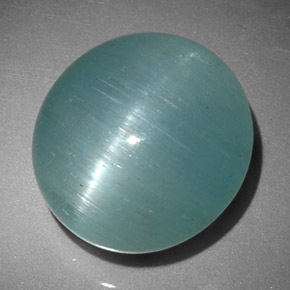
While most aquamarines being sold in jewelry stores today are cut into faceted gems, occasionally they are cut in cabochon styled gems and give a cat's eye effect. Aquamarine is the birthstone of those born in March and with the Zodiac sign of the Scorpio.

Tuesday, November 5, 2013

Ruthenium

Discovered in 1844 by Karl Klaus of Russia, ruthenium often occurs with members of the platinum group of metal. It is a silver-gray metal and is VERY brittle, and is often found in the Ural mountains in North and South America. While it is often found in other metals and elements, there is a complex process that can be used to separate it.


Ruthenium is used as a hardener and is one of the best for addition to palladium and platinum. It is often alloyed with them to make electrical contacts with ultra wear resistance. It does not often tarnish at room temp, but will oxidize in air 800 degrees celsius.

Ruthenium was named after the Russian word "ruthenia", which means "Russia". It makes sense, being it's first discoverer was from Russia. It is possible that a Polish chemist discovered ruthenium first, but his work was never backed up and he withdrew his claims, making Klaus the founder.

Friday, November 1, 2013

Technetium

What is technetium?
Discovered by Carlo Perrier and Emilio Serge of Italy in 1937, the first traces of technetium were found in a sample of molybdenum that had been bombarded with neutrons.

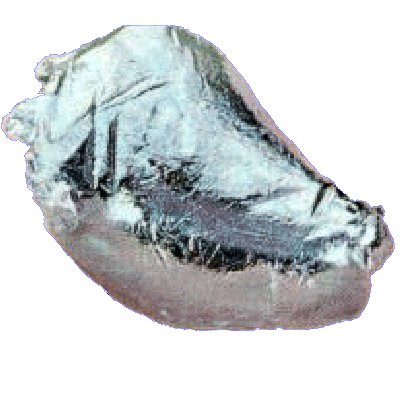
 Technetium is a bright, silvery white metal that tarnishes slowly in moist air. Techentium's cellular structure is very similar to that of rhenium. Technetium is a corrosion inhibitor for steel and is also a superconductor at 11K and below.

The word 'technetium' derives from the Greek word 'technikos' which means an art of technetos: artificial, this was the first element made artificially.
Cellular structure of technetium


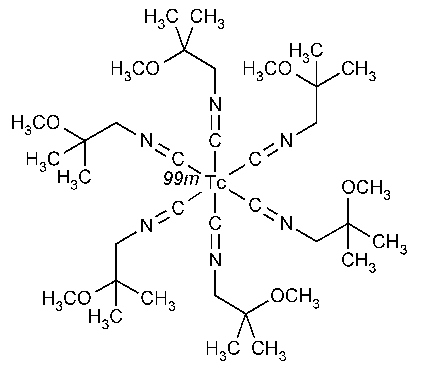
Medical isotopes tests have technetium in them.