Wednesday, January 15, 2014

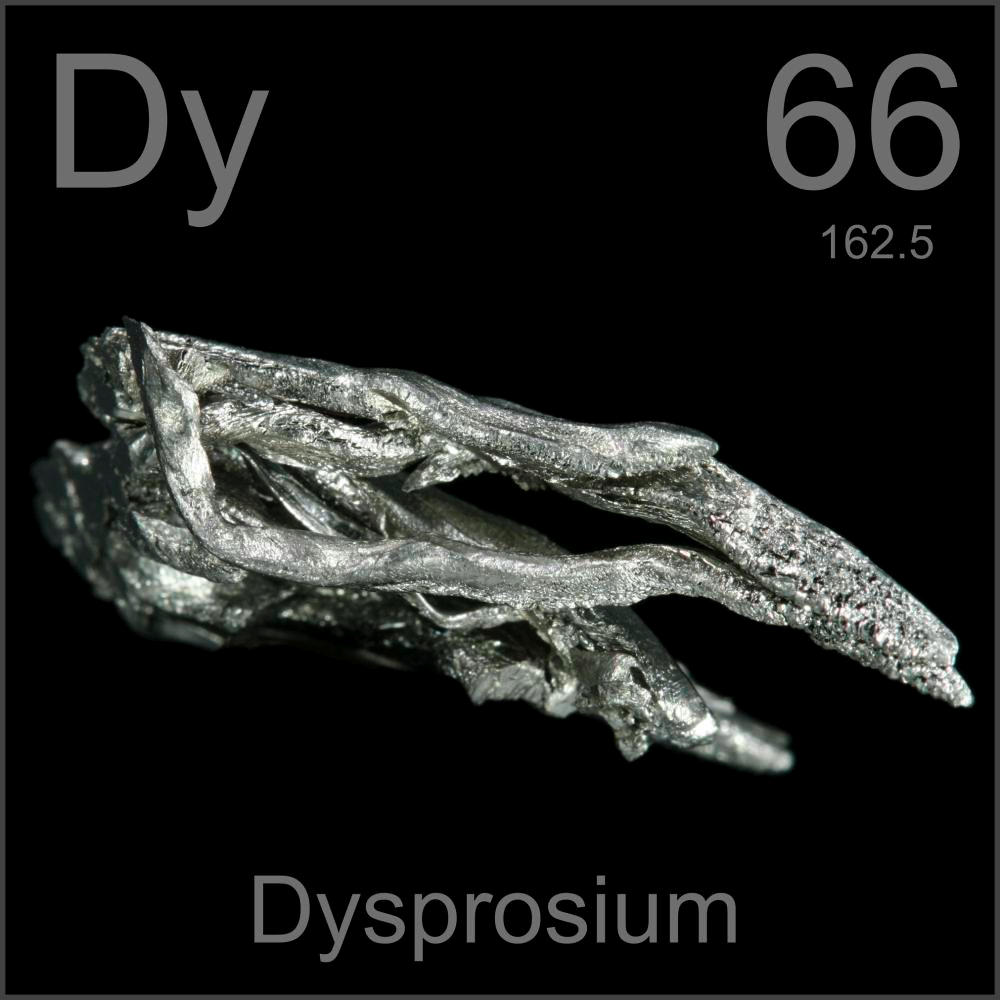
Dysprosium

* Dysprosium will be shortened to Dy for this blog.

Dy is named from the Greek word dysprositos, which means hard to get at. It was discovered by Paul Emile Lecoq de Boisbaudran of France in 1886. It IS quite hard to get at, because as most lanthanides, it is not found free in nature and has to be mined from these minerals: xenotime, fergusonite, gadolinite, euxenite, polycrase, blomstrande, monazite and bastnasite. Most dy is mined from clay ores that are found in southern China.

While dy is stable in air at room temperature, it does oxidize very quickly. When it dilutes with certain mineral acids, hydrogen is produced. While it can be easily cut with bolt cutters, it cannot be cut with a knife. It's abilities and look are affected by the smallest little imperfections- not storing it properly or exposing it to other minerals.

Dy is often used in magnetic items, as it is very paramagnetic. It is often used it:


  • Laser materials
  • Nuclear control rods
  • Nuclear reactors
  • Compact discs
  • Magnetic resonance imaging
  • Nano-magnets


Tuesday, January 14, 2014

Terbium

Fun Fact: Terbium is similar to calcium in\
many ways.
Terbium was discovered by Carl Gustaf Mosander of Ytterby, Sweden. Terbium is actually named for Ytterby, where it was discovered in 1843. Terbium is a very common element- it is actually more common than mercury and silver. While it is common, it is still expensive- $1800 for 100 grams.

Terbium is often used in:


  • Solid state devices
  • Electronic devices
  • Fluorescent lamps
  • Color television tubes
  • Biochemistry probe
  • Lighting technology, including incandescent lighting
I apologize for this being so short- I really couldn't find a lot about this mineral.

Monday, January 13, 2014

Gadolinium

Discovered by Jean de Marignac in 1880, gadolinium is named after the mineral gadolinite and also the Finnish meteorologist Johan Gadolin. It is never found free in nature- instead, it is found in other elements like monazite and bastnasite.

 Unlike most rare earth elements, it is very stable in dry air. However, it does tarnish quickly if exposed to moist air, as it reacts slowly with moisture and water. It also dissolves in dilute acid.

Gadolinium is not cheap- it is $485 per kilogram for the soft white metal! It is used in products such as microwaves, tvs, neutron radiography, and other items of lesser importance, such as computer memory chips and alloys and compounds. However, the price of gadolinium has dropped over the years as new technologies have been developed... like everything else, it is re-produced using different elements and chemicals, and has lost its value. It can now be prepared through reducing anhydrous fluoride with metallic calcium.

Friday, January 10, 2014

Europium

Hmmm.... I sure wonder what this element was named after. In case you cannot figure it out, it is named after Europe and was discovered by Eugene-Antole Demarcay of France in 1896. The most reactive of all rare earth elements, it oxidizes rapidly in air and ignites in the air to temperatures about 150 degrees celsius. As if being the most reactive rare earth element wasn't enough, it is also the rarest and most expensive one as well- $36 per gram.

Europium is currently being studied for use in nuclear reactors, as it absorbs neutrons well. It is already currently used in:
Down Syndrome Screening
Plastics to make lasers
TVs
Yttrium based phosphors
Anti-counterfeiting devices in Euro banknotes
Study of igneous rocks

Tuesday, January 7, 2014

Samarium

Samarium is the 62nd element in the periodic table of elements. I am going to do things a little differently this post- I am going to start out with the USES of the element. Samarium is used in the making of headphones and also is used to treat pain in bone cancer patients. It is also used in ethanol catalysts, permanent magnets, and nuclear reactors.

Samarium was discovered by Paul Emile Lecoq de Boisbaudran of France in 1879. He named it after the mineral smarskite. This element is not found free in nature, and the only way to produce it today is to do an ion exchange from monazite sand, a special sand that often contains rare earth elements such as samarium. Monazite sand can contain up to 2.8% of samarium.

A neat fact about samarium is that it was observed and it is thought to boost the metabolism, though it is not essential to the human body.


Monday, January 6, 2014

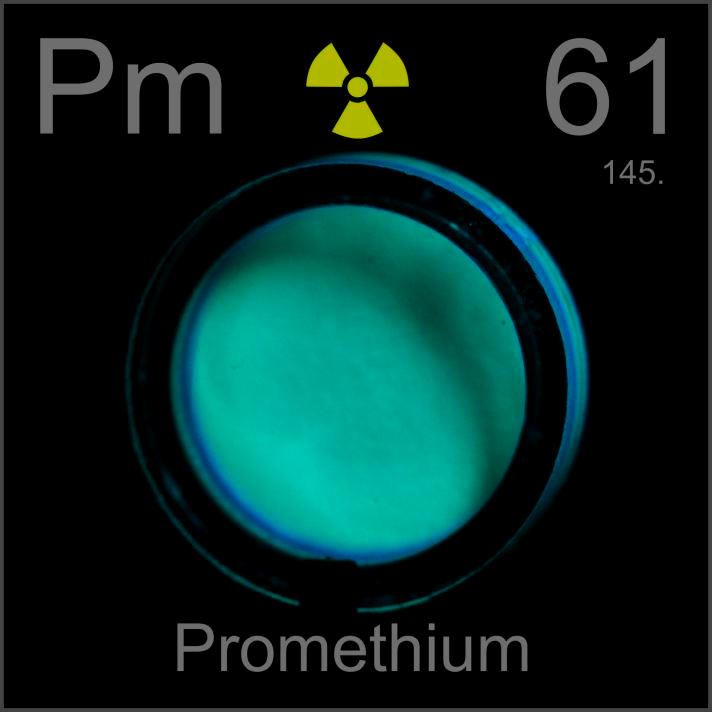
Promethium

Promethium was the last of the rare earth lanthanide elements to be discovered. In 1926, American chemist B. Smith Hopkins at the University of Illinois, claimed that the element had been found in rare-earth residues of monazite and he named it illinium, after his college and state. Hopkins thought that the element was radioactive with a short half-life.

However, Hopkins was not the only one to put in claims on the element: Italian chemist Luigi Rolla at the Royal University in Florence also claimed to have found the element in 1924. However, the right went to the holder of evidence that the element had, in fact, been produced- Jacob A. Marinsky.

The element was named after the Greek god Prometheus, who is famous in mythology for stealing fire from Mount Olympus to give to people.

 It was later found out that Hopkins was indeed correct- promethium is radioactive and should be handled VERY carefully. It was also discovered that it is the ONLY rare earth radioactive metal. Because out the radioactivity, its salts glow pale blue or green in the dark. The only current known way to produce promethium is through uranium fission.


Thursday, January 2, 2014

Neodymium

Neodymium magnets
Discovered by Baron Carl Auer von Welsbach of Vienna Austria in 1925, neodymium is the 60th element in the periodic table and the 4th on the lanthanide table.  It comes from the Greek words neos (meaning new) and didymos (meaning twin).

While neodymium constitutes to 38 ppm of the earth's crust, it is not found free in nature. However, it is found in the minerals monazite and bastnaesite, and tarnishes rapidly when exposed to air.

It is often used in:


  • Welder's and glass blower's goggles
  • Colors glass, ceramics and enamels
  • Permanent magnets
  • Fertilizers
  • Predictor of earthquakes
  • Solid state lasers
  • Infrared radiation filtering