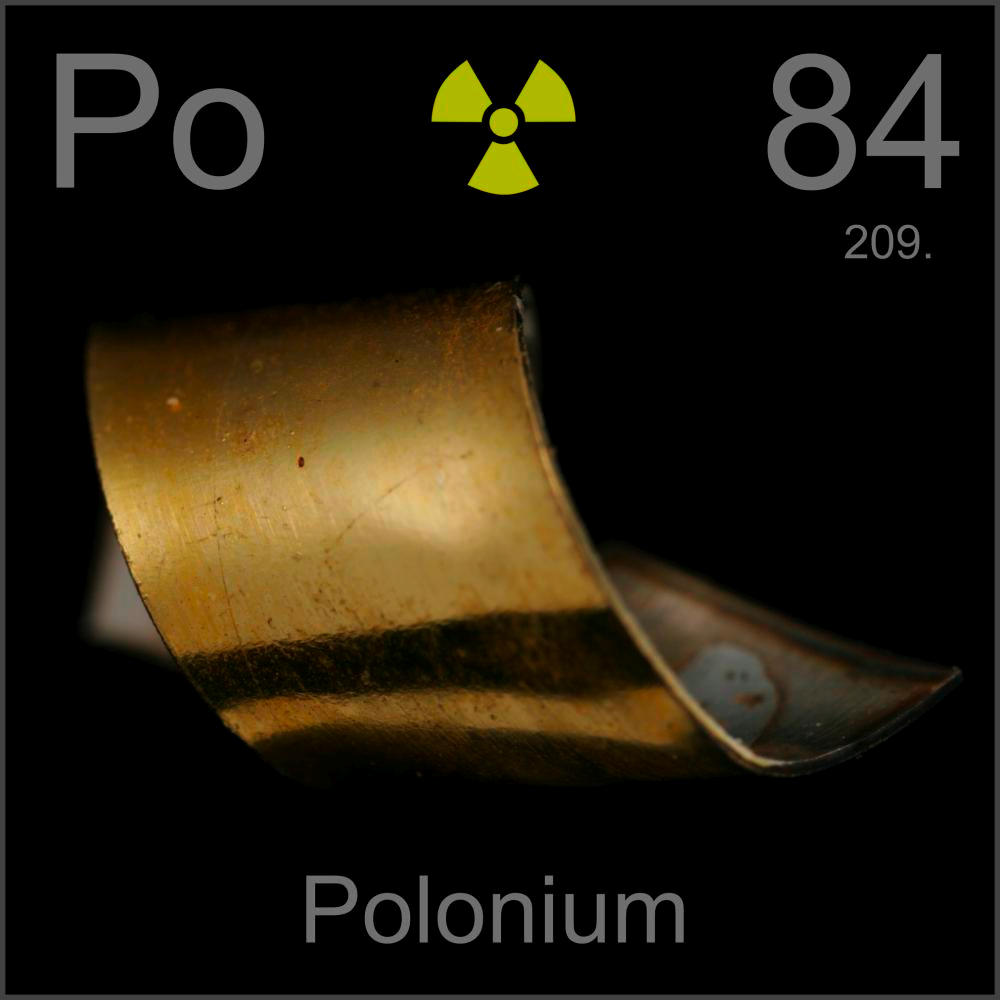
Polonium was discovered by Marie and Pierre Curie along with radium in 1898. They found it while investigating radioactivity in Paris. When they discovered it, they wrote: “We thus believe that the substance that we have extracted from pitchblende contains a metal never known before, akin to bismuth in its analytic properties. If the existence of this new metal is confirmed, we suggest that it should be called polonium after the name of the country of origin of one of us.”
Polonium was named for Marie's birth country- Poland. At the time of polonium's discovery, the danger of working with radioactive things wasn't known. Because of this, their notes from their discoveries were so radioactive that they are currently stored in a lead box. Polonium is very dangerous and toxic. It is highly dangerous if swallowed or inhaled- and exposure to it increases chance of getting many different cancers.
Polonium, while dangerous, is actually quite rare. It is a silver/gray metal. It is often used in products to get rid of static electricity in certain processes and is in rolling paper, wire and sheet metal. However beta decay sources are more often used for this because they are less toxic.
Wednesday, April 30, 2014
Wednesday, April 9, 2014
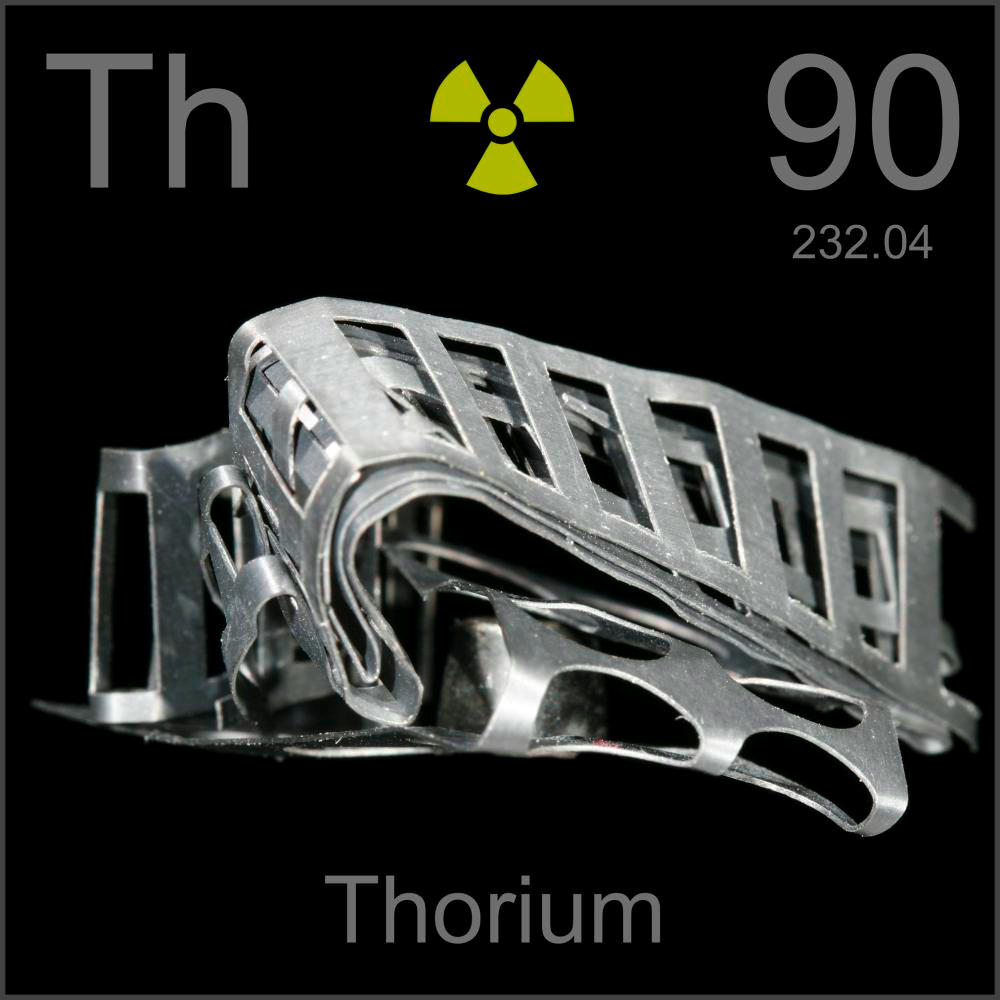
Thorium
In the future, there are plans for fueling nuclear reactors with thorium. Not only is thorium more abundant on Earth than uranium, but 1 ton of mined thorium can produce as much energy as 200 tons of mined uranium.
It is used in heat resistant ceramics and also in the aerospace industry along with magnesium and other alloys.
Tuesday, April 8, 2014
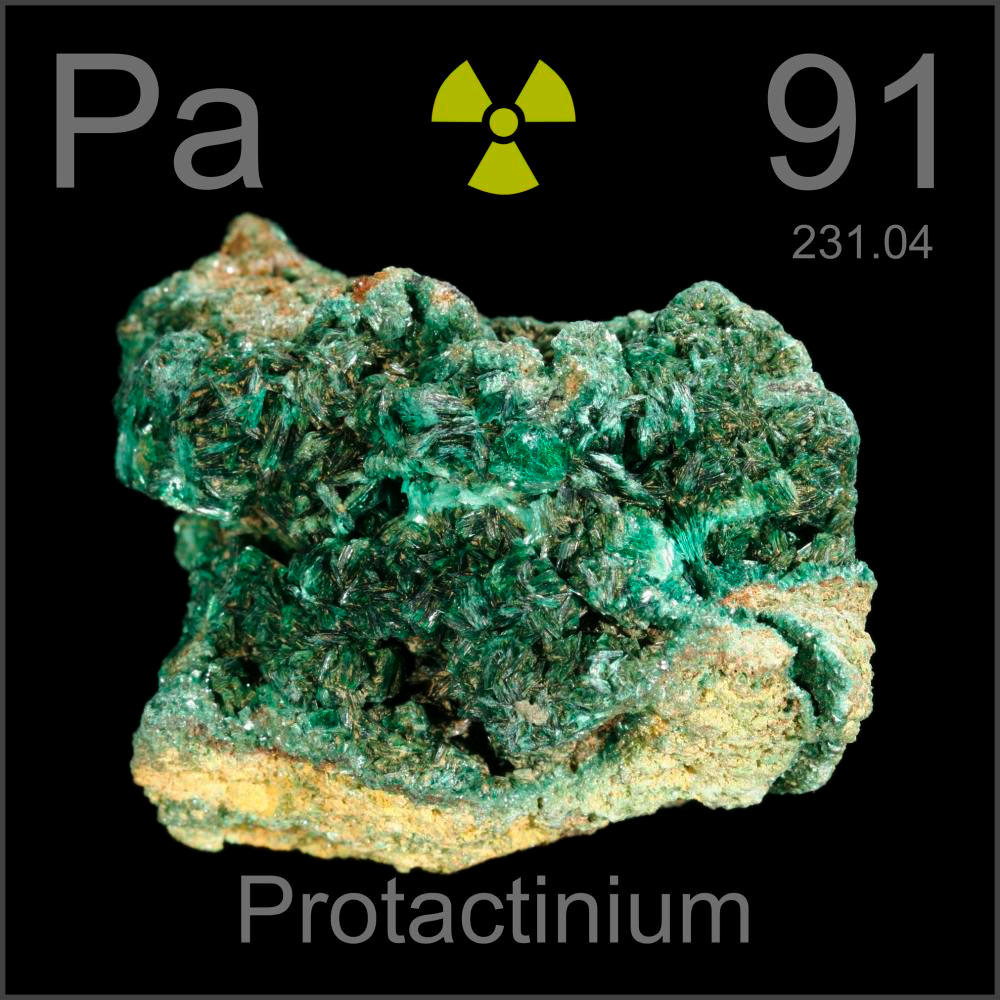
Protactinium
Protactinium is a shiny and silvery radioactive metal. It tarnishes very slowly in the air. It is one of the rarest and most expensive naturally occurring elements, costing $280 per gram. The most that has been found so far was 125 grams in Great Britain in 1961- it was found in radioactive nuclear waste. Even so, protactinium is radioactive on its own and because of that must be handled with extreme delicacy and care.
It is found in many uranium ores, and can also be obtained by extracting it from uranium. So far it has only been used in research projects.
Monday, March 31, 2014
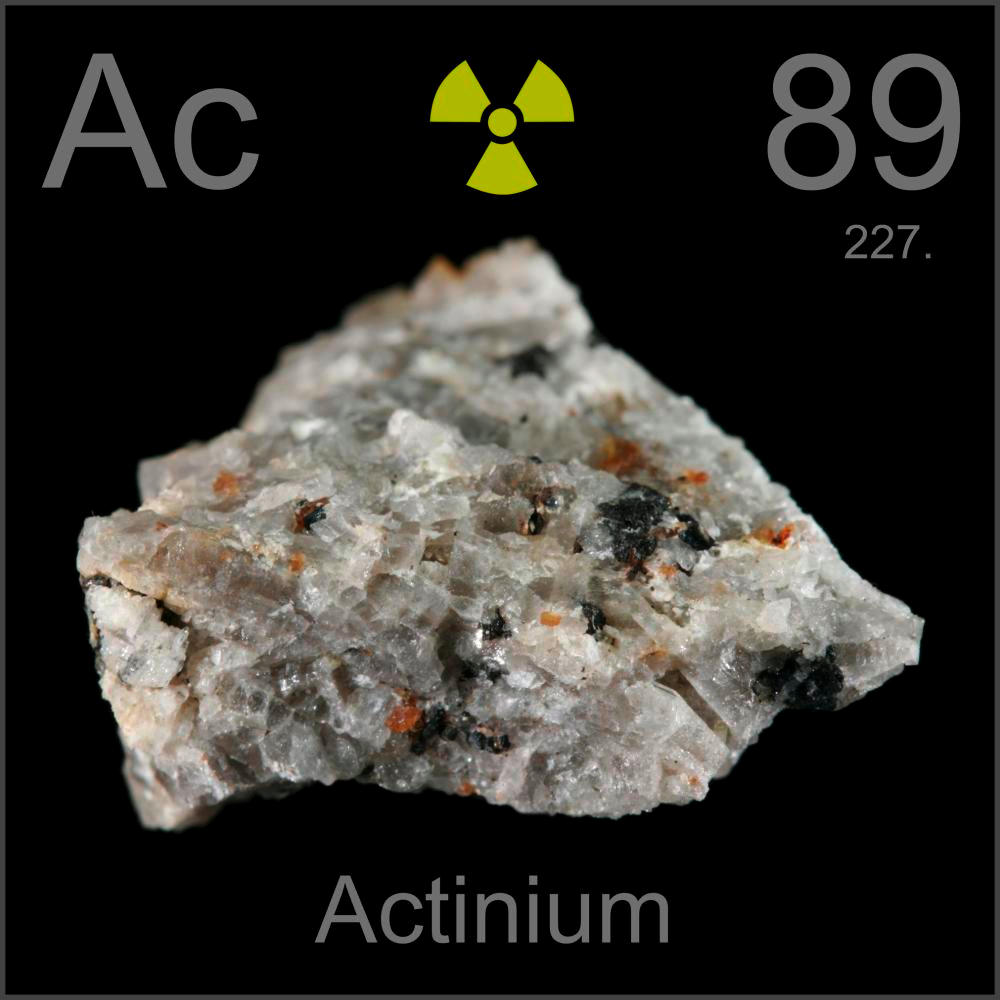
Actinium
Actinium is very active, actually 150 times more so than radium. None of it's properties are stable. It was discovered by Andre Debierne in 1899 and is named from the Greek word for beam/ray.
Actinium is found in decaying uranium and can be prepared by reducing flouride within lithium vapor. Because of it's high activity level, it is good at producing neutrons but more importantly, it has been used in studies to help cure cancer.
Monday, March 17, 2014
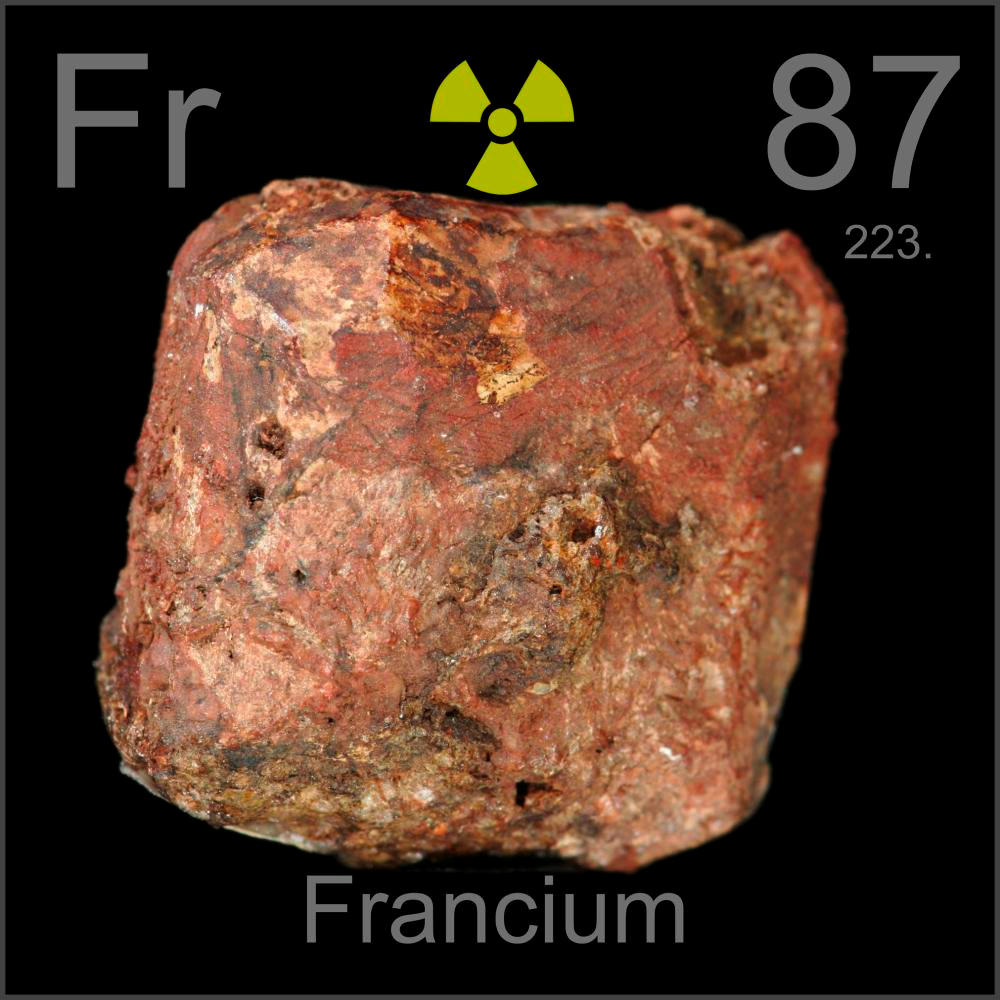
Francium
Discovered by Marguerite Perey of France in 1939, francium was named for France. The isotopes of francium are highly unstable, so all information known about it is from radiochemical techniques. It occurs naturally in uranium, but less than one ounce can be in the earth's crust at one time. Francium was actually predicted in 1870- scientists were convinced that there would be another alkali metal higher than caesium. They even predicted it would be element number 87!
There had been numerous false claims to the discovery of francium, but Marguerite was the one to discover it. The difference between her and other researchers is that she found the traces of it in decaying actinium; actinium is the PRIMARY natural source of francium, but it is harder to obtain than from uranium. Due to its rarity, francium has not been used in any commercial products or machines.
Saturday, March 15, 2014
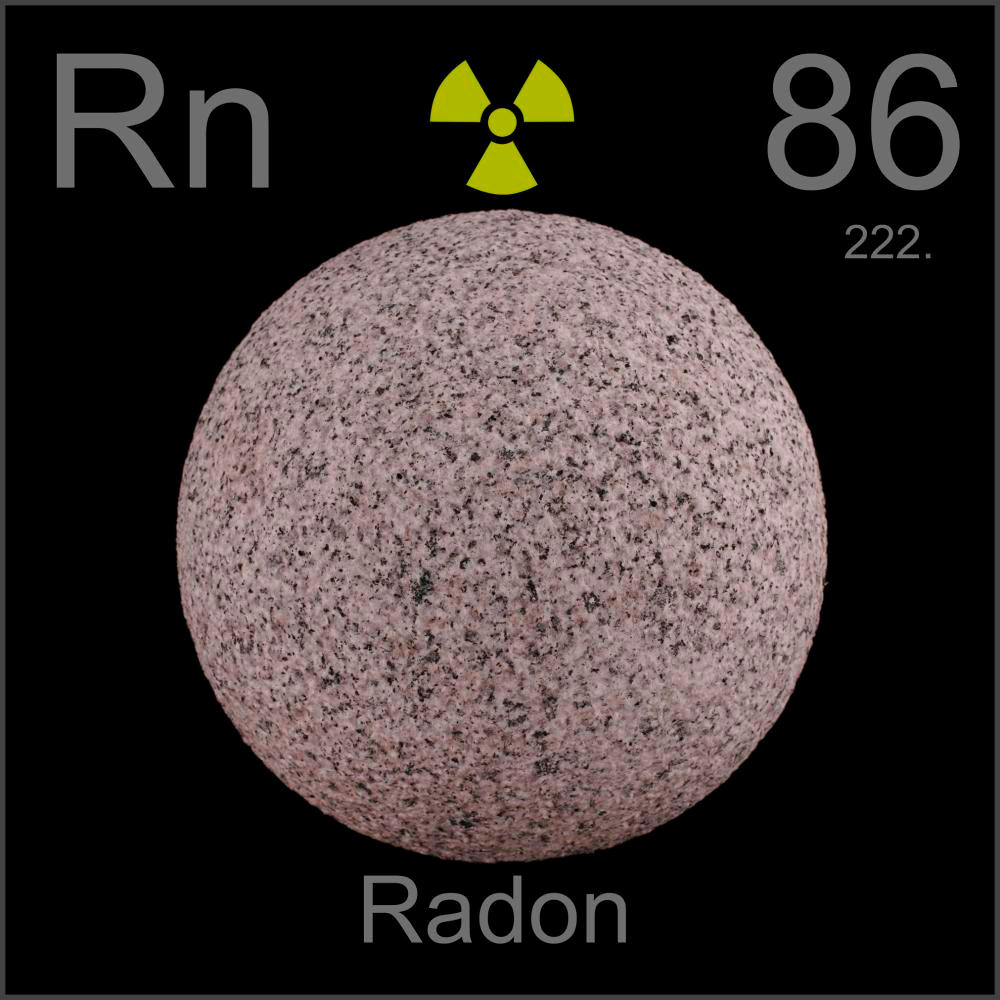
Radon
Radon occurs naturally in some spring waters. Ernest Rutherford is sometimes mistakenly credited with the discovery of radon... however, he discovered the alpha particle radiation given OFF by radon.
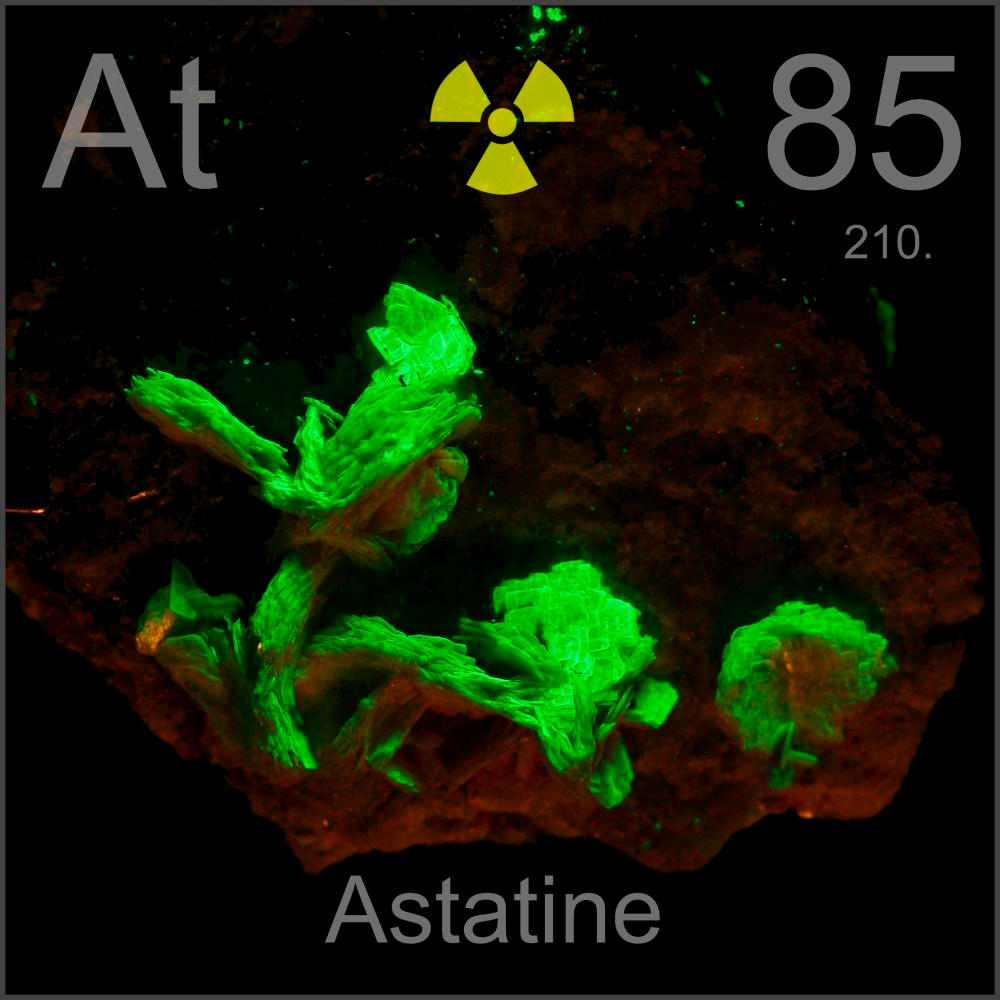
Astatine
Astatine is invisible with the naked eye, since a sample large enough to see would disintegrate from its own radioactivity. Because of this, it is estimated that there can only be TWENTY-EIGHT GRAMS OF ASTATINE ON EARTH AT A TIME. Astatine is an important element in nuclear medicine, but as it decays so quickly it must be used within a few hours of its production. It has been used instead of iodine in some procedures, safer as it has a shorter half-life.
Subscribe to:
Posts (Atom)